Harum
Harumio gives international shoppers access to products from Korea, from K-fashion and K-beauty to K-pop merch, with purchasing and shipping handled for them. MIT-DEV built the search, discovery and shopping features that let them shop a Korean catalog in their own language.
Visit live site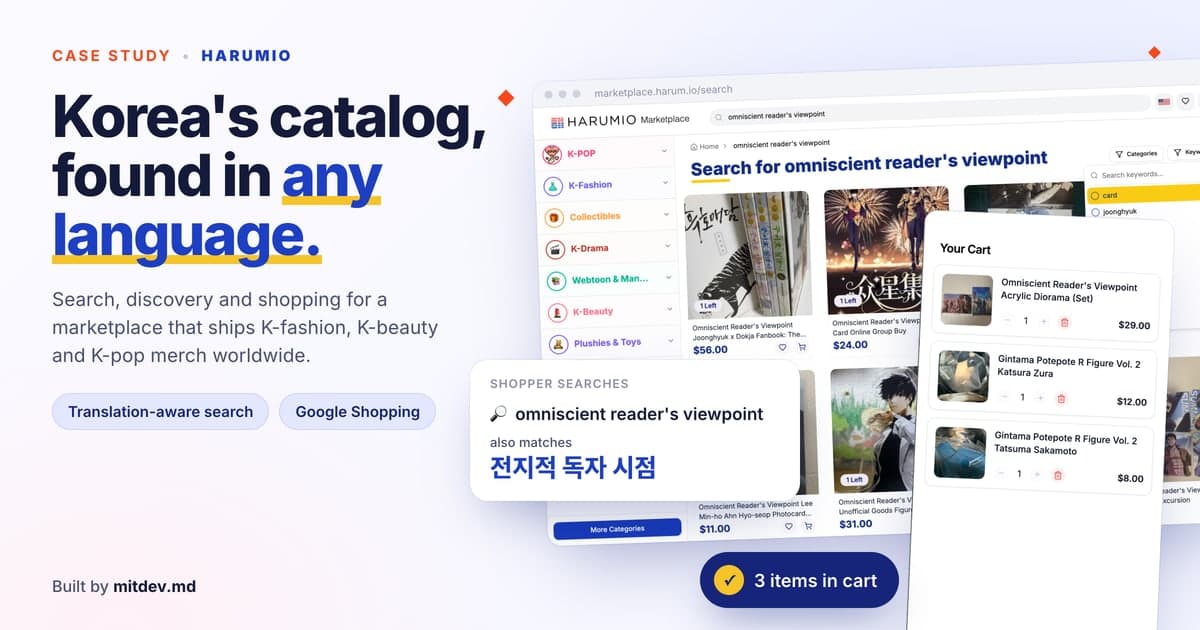
Harumio (harum.io) gives international shoppers access to products from Korea, from K-fashion and K-beauty to K-pop merchandise and collectibles, with purchasing and international shipping handled for them. MIT-DEV built the search, discovery and shopping features that let those shoppers find a Korean catalog in their own language.
10k+
collectors
shopping on Harumio, by its own count
777
categories
mapped from Korean marketplaces
8
departments
from K-pop to K-beauty, in one menu
1
search, two languages
English and Korean listings in one result
5
steps
from genre to merch in the Finder
E2E
tested journey
from search to cart
The challenge
Harumio's catalog comes from Korean marketplaces, so most listings are titled and described in Korean. Shoppers search in their own language, often by the English name of a webtoon, a drama or a K-pop group. A plain text search misses most of what is actually for sale.
To turn that catalog into a store people can shop, the platform had to be:
- Findable: a search that understands the names shoppers use, whatever language the listing is in.
- Browsable: hundreds of marketplace categories turned into a menu a shopper can scan.
- Reliable: a cart and a wishlist that hold up with many items, on any device.
What we built
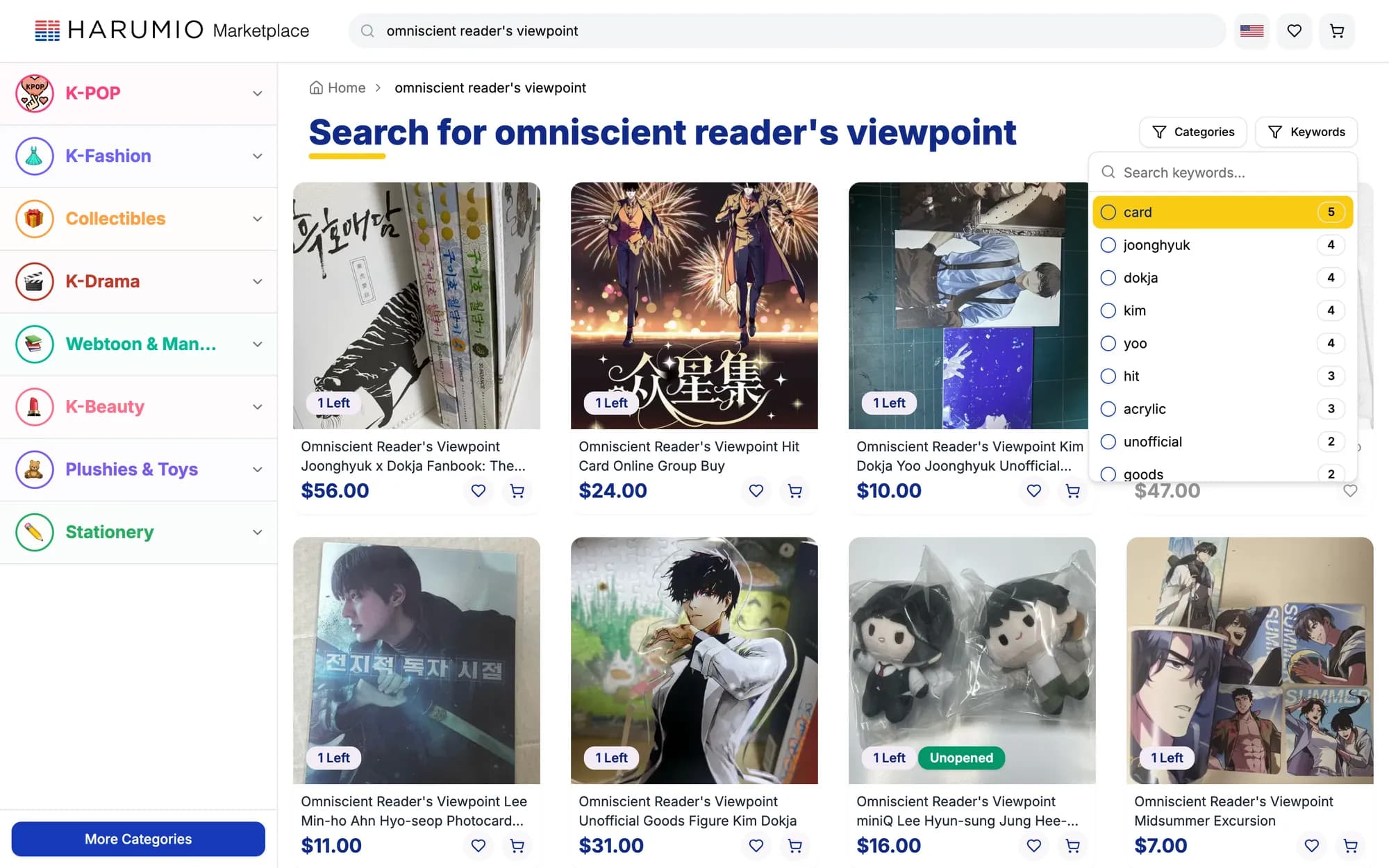
Search that speaks both languages. A static replacer applies every matching translation of a query in parallel, so a search for Omniscient Reader's Viewpoint also finds listings titled 전지적 독자 시점. Webtoon and manga titles are enriched with data from MangaUpdates, and every search lives at a clean URL, such as /search/q/seventeen.
Filters that keep up. Results can be narrowed in real time by category and by keyword, and a shopper can extend the search with a keyword in one click.
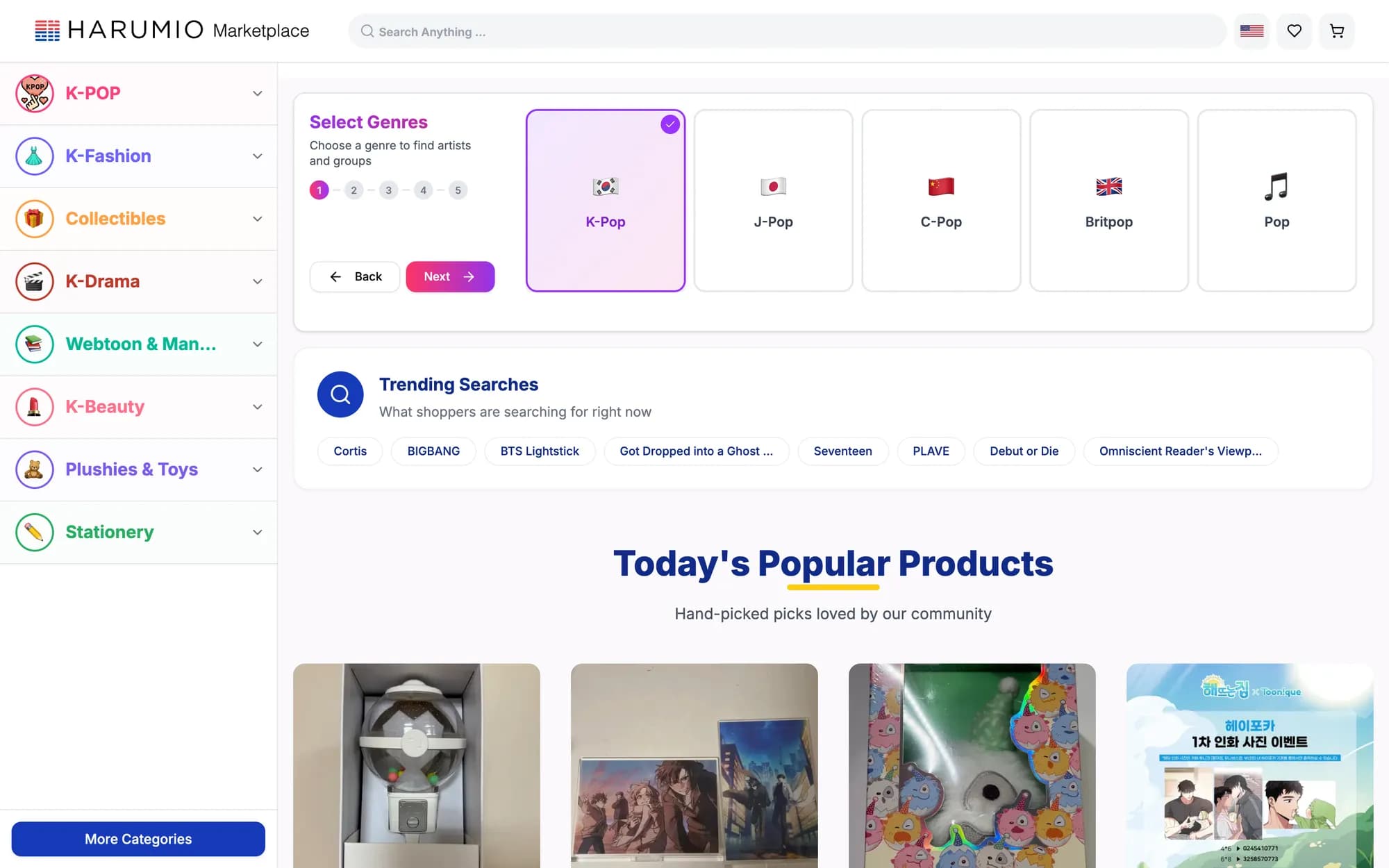
Merch Finder. A guided finder takes a fan from genre to group, artist and type of merchandise in five steps. The K-pop artist list is kept current from an online database, with corrected translations, so artist names read the way fans write them.
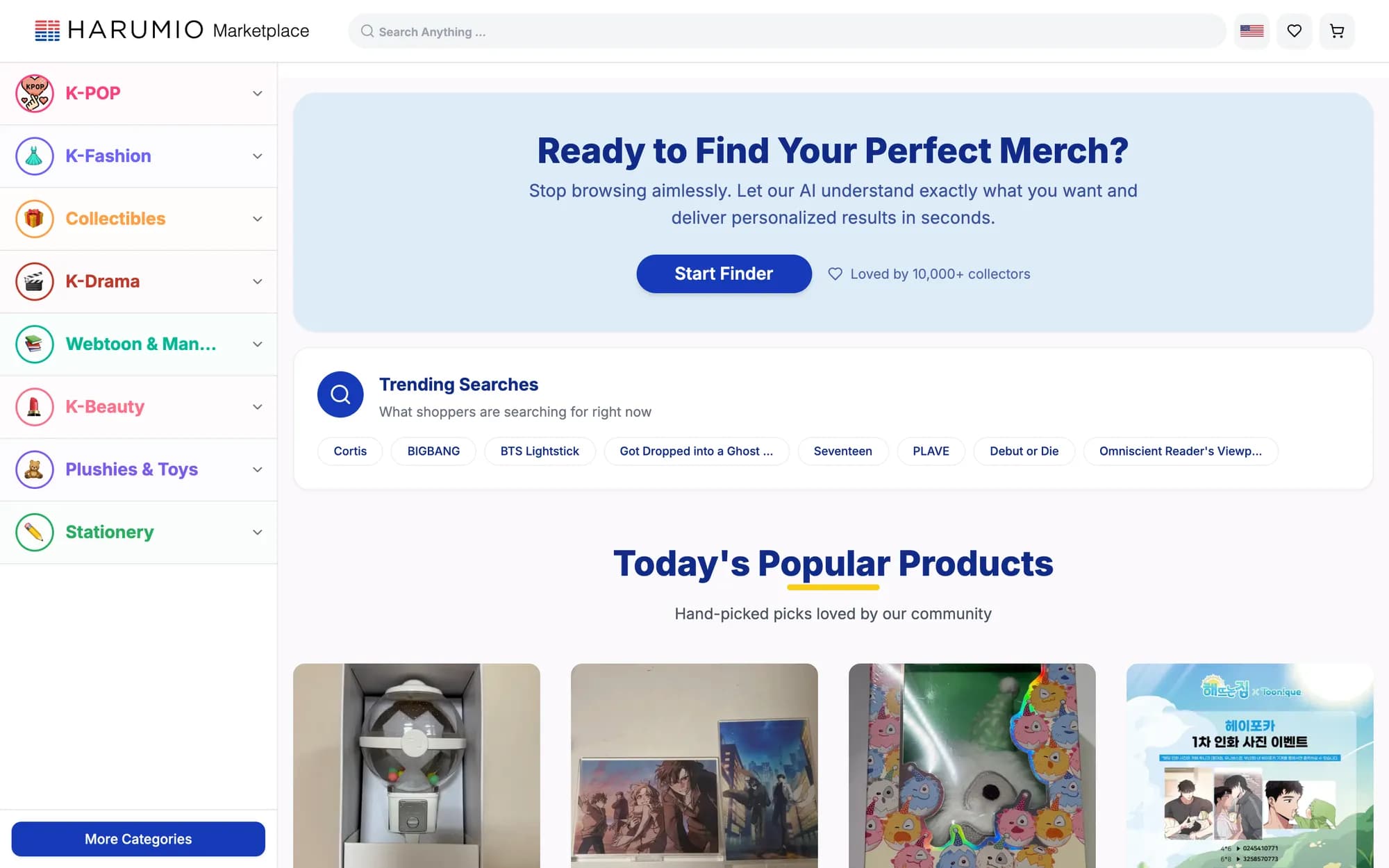
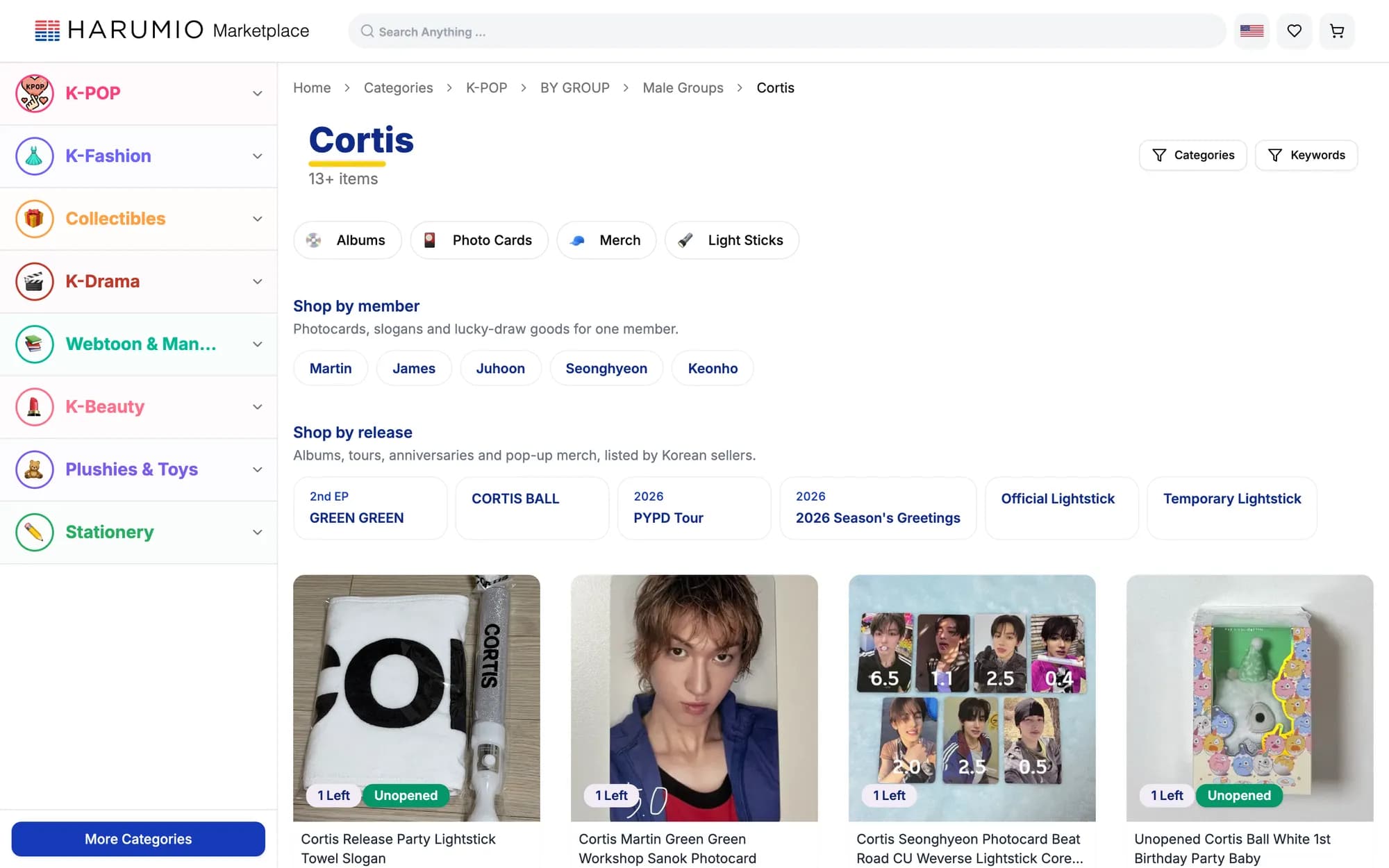
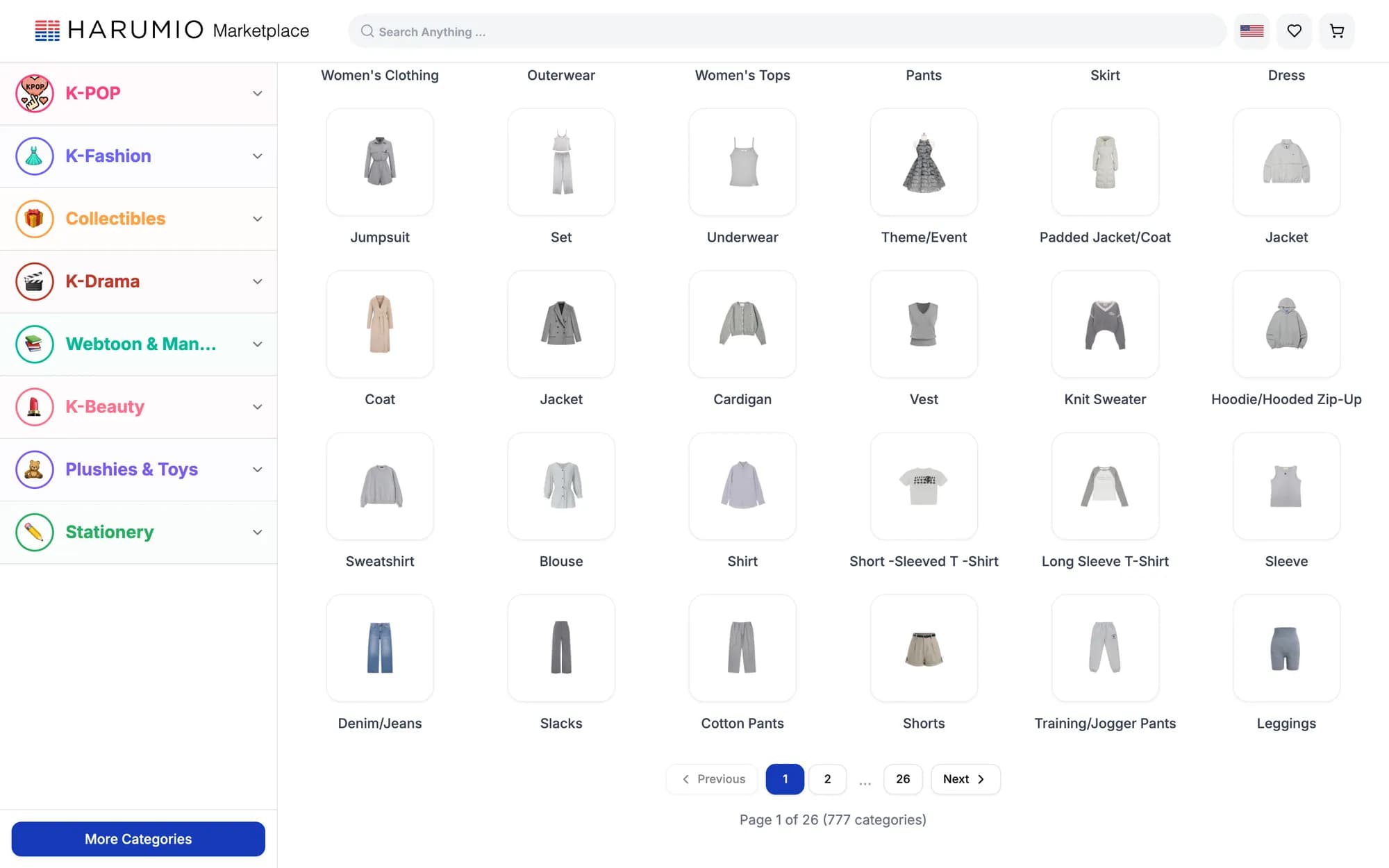
A catalog you can browse. Categories from the Korean marketplaces are mapped dynamically into the menu, from K-pop by group and member to K-fashion and K-beauty. Category pages are paginated, so all 777 categories stay quick to scan.
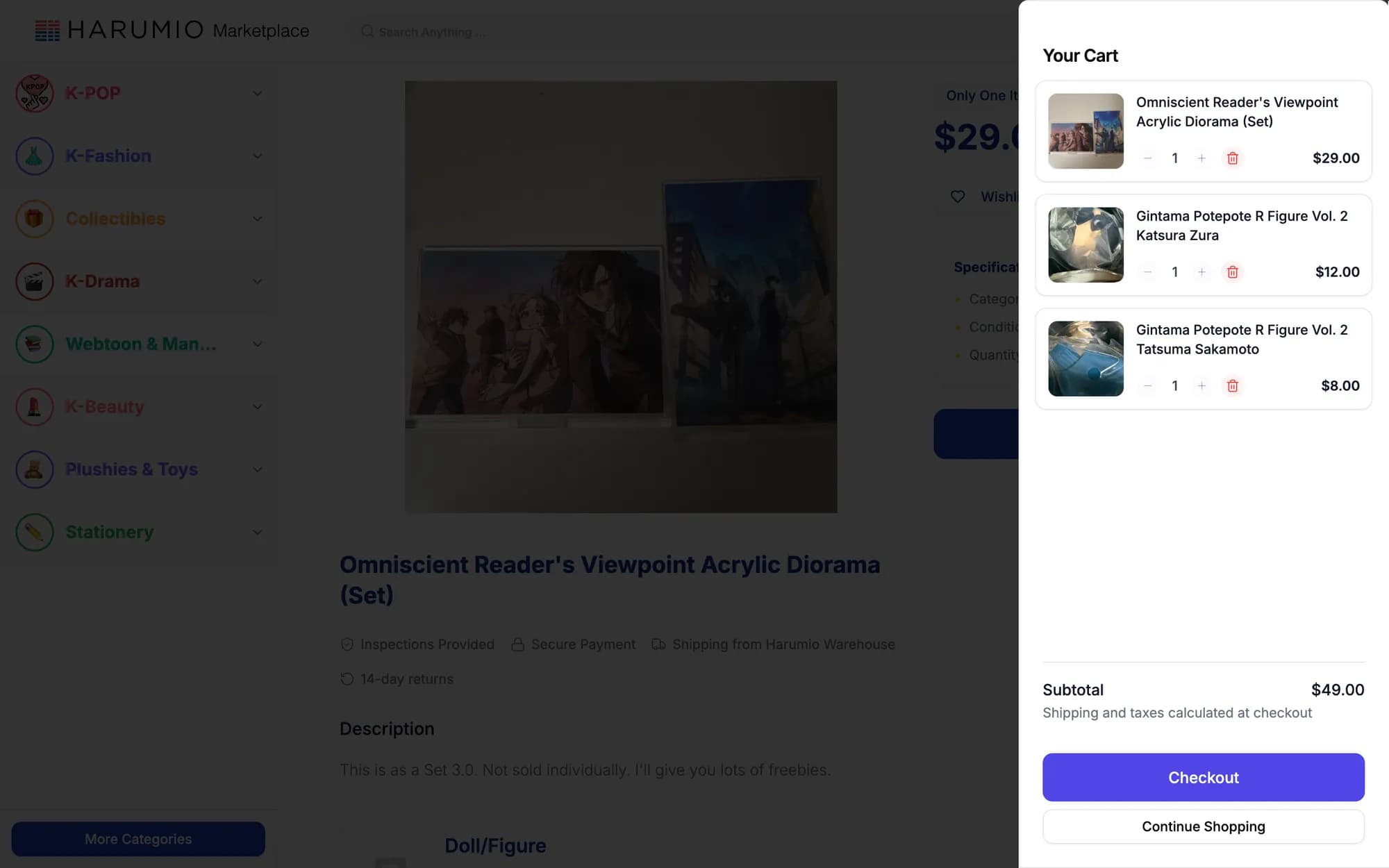
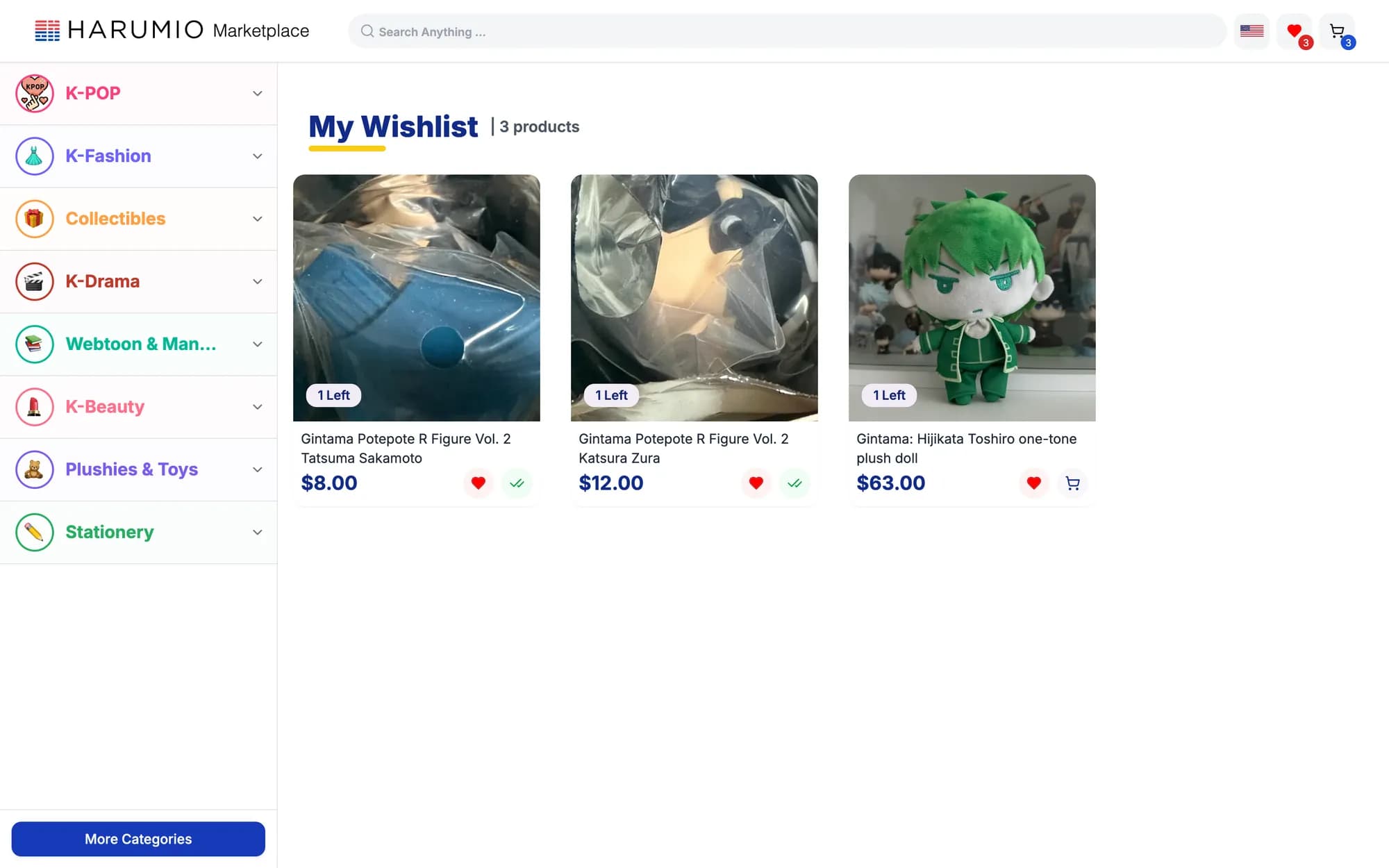
Cart and wishlist. We reworked the add-to-cart flow so it handles several items reliably, and added a wishlist page with mobile support.
On Google Shopping. Marketplace products are synced to Google Merchant Center, so they can appear in Google Shopping.
A Korean catalog, searched in English
- Searches missed listings titled in Korean
- Several items in one cart could fail
- Supabase 409 and 502 errors broke requests
One store, in the shopper's language
- Every matching translation applied to each search
- Cart and wishlist handle many items, on any device
- The full journey covered by automated tests
Under the hood
A store loses shoppers to slow pages and failed requests as surely as to a bad search. Alongside the features, the team hardened the platform:
- Clean translation data: fixed the duplicate-record errors in the translation tables.
- Stable requests: resolved the Supabase 409 and 502 errors.
- Faster pages: sped up data fetching and rendering, and improved the mobile design.
- Tested end to end: automated tests cover the full user journey, from search to cart.
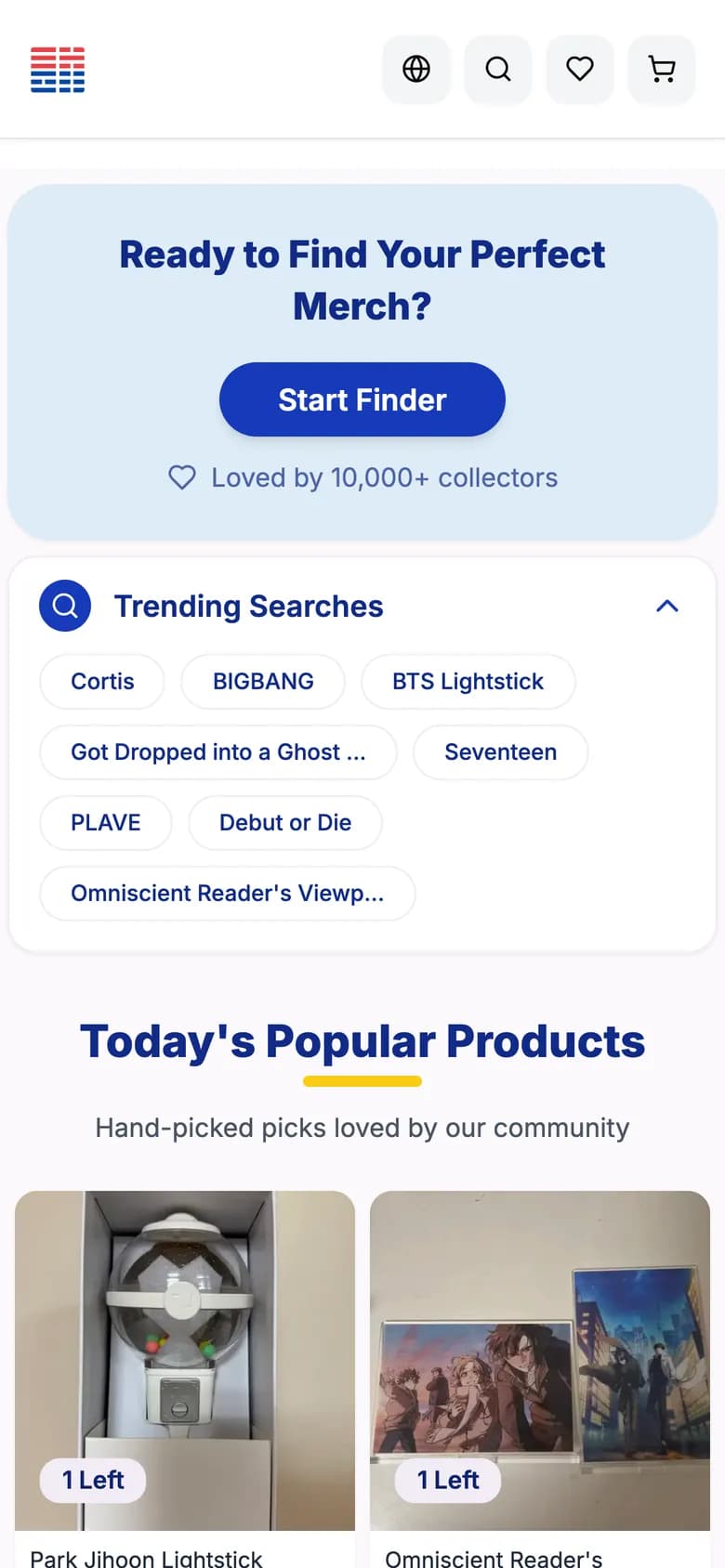
Home
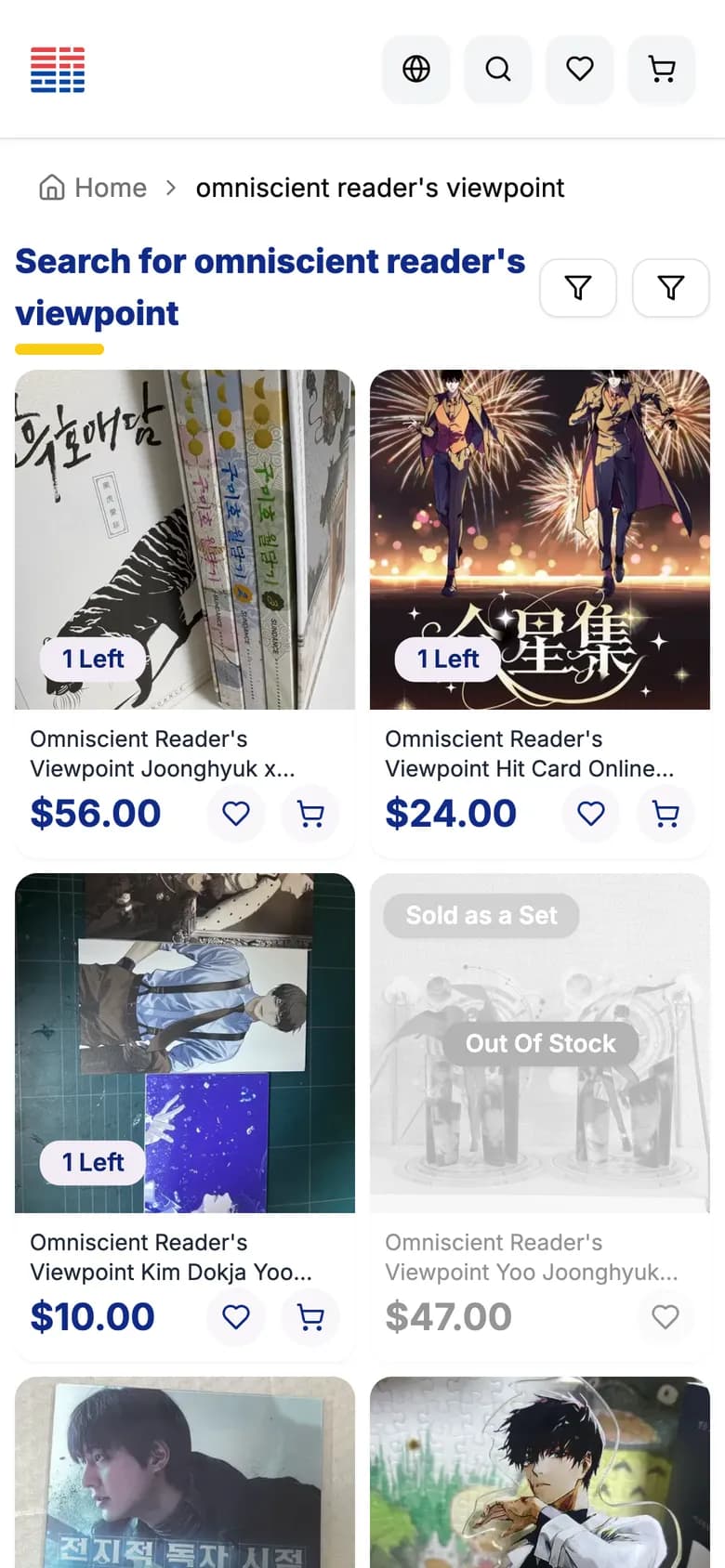
Search
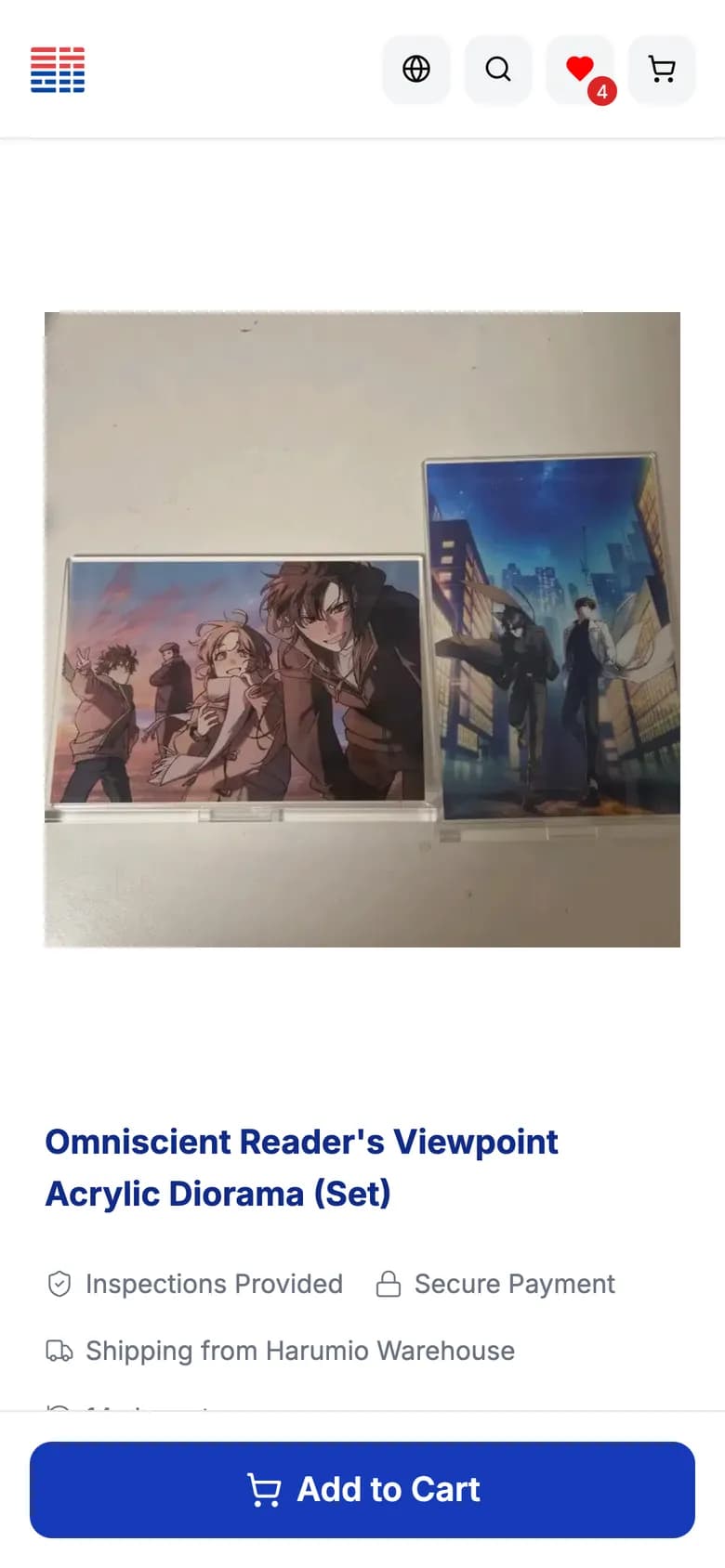
Product
SEO work is ongoing, and a move to Shopify is being assessed.
The result
A storefront where international shoppers find Korean products in their own language, browse quickly on any device, and move from search to the cart through a tested flow.